Automated Self-Healing Infrastructure
Automated Self-Healing Infrastructure empowers IT Ops to maintain high availability and resilience by automatically detecting and remediating issues without human intervention. By integrating continuous monitoring with preconfigured recovery actions, systems can self-correct, reducing downtime and improving operational efficiency.
How It Works
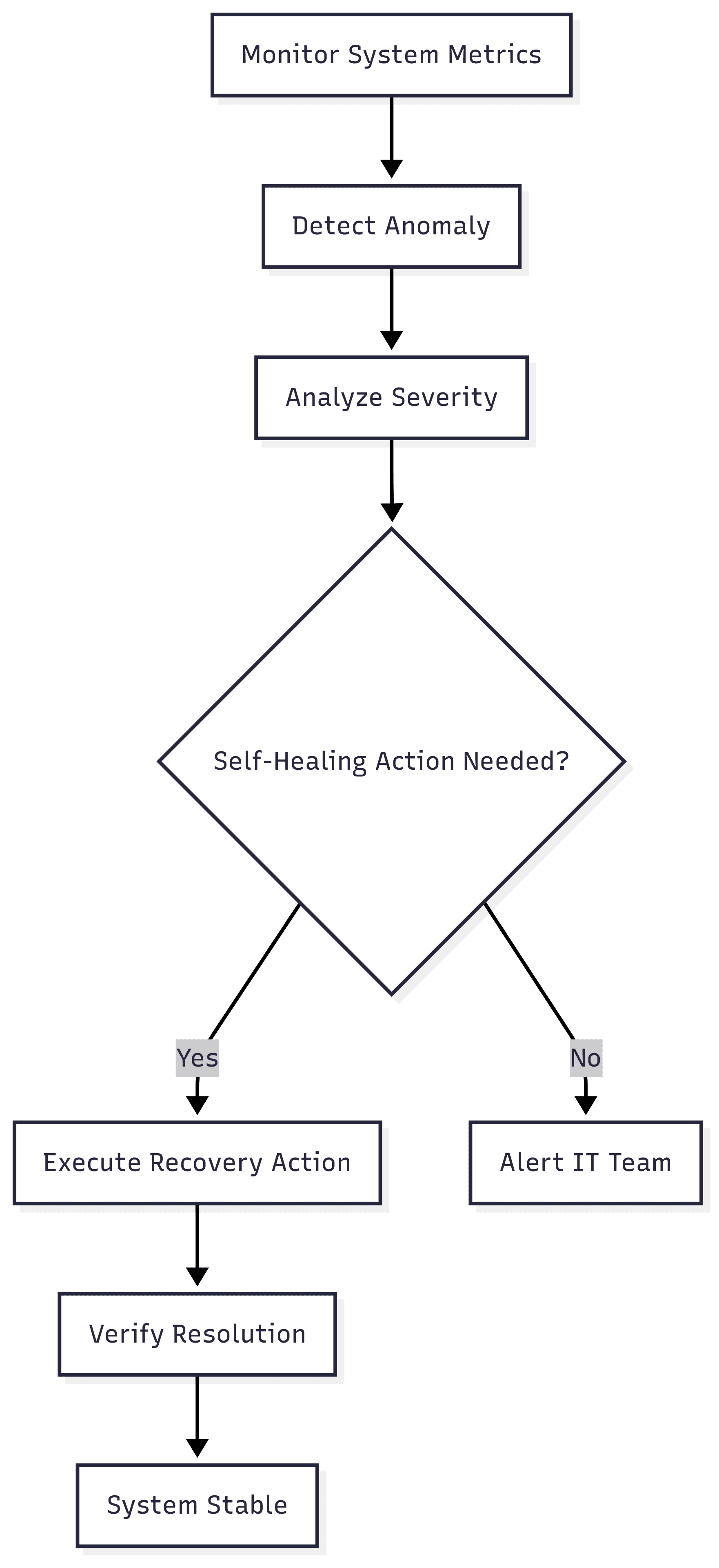
Continuous Monitoring
The system constantly tracks performance and health metrics across the infrastructure.Anomaly Detection
When an anomaly is detected, the orchestration engine analyzes the severity and potential impact.Decision Point
The system determines whether an automated self-healing action is required.Execute Recovery
If necessary, predefined recovery workflows—such as restarting services or reallocating resources—are executed.Verification
Post-action, the system verifies that normal operations have resumed.


Benefits
Reduced Downtime: Swift automatic remediation minimizes service interruptions.
Operational Efficiency: Less manual intervention allows IT teams to focus on strategic tasks.
Resilience: Continuous self-correction keeps systems robust under variable loads.
Conclusion
Automated self-healing infrastructures exemplify proactive incident management. By leveraging orchestration for immediate, automated responses, organizations can maintain optimal performance while reducing the risk and impact of unforeseen issues.
© adentro Systems GmbH