Dynamic Incident Escalation and Routing: Orchestrating Proactive Incident Management
In today’s complex IT landscapes, systems generate a vast number of alerts that can quickly overwhelm manual processes. Dynamic Incident Escalation and Routing leverages orchestration to automatically assess these alerts, determine their severity and impact, and ensure that critical issues are escalated and routed to the appropriate teams in real time. This approach harnesses contextual data from across your infrastructure to deliver precise, efficient incident handling.
How It Works
Alert Detection
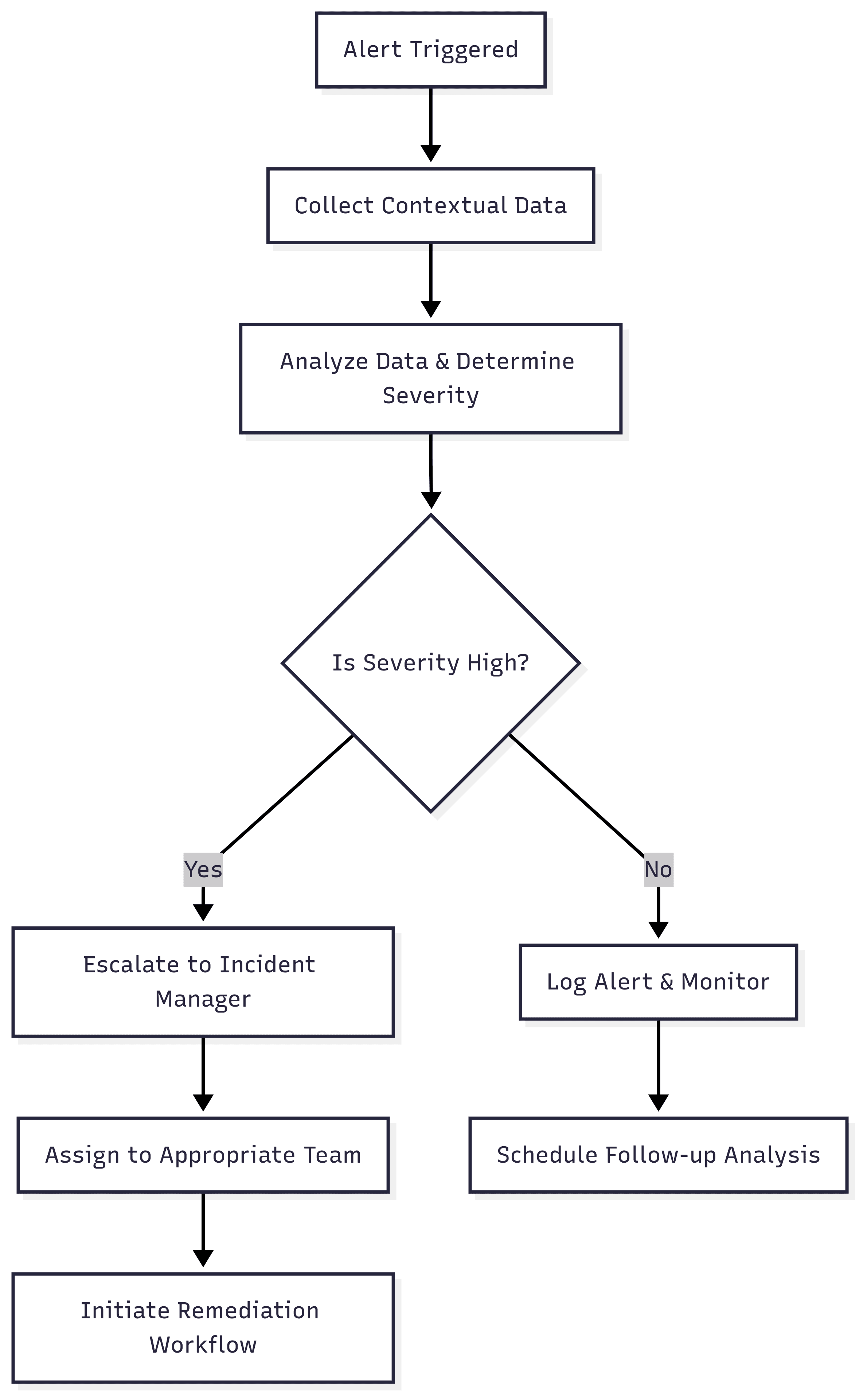
When monitoring tools detect abnormal behavior, an alert is triggered immediately.Contextual Data Collection
The orchestration engine gathers supplemental data from various sources such as system logs, performance metrics, and configuration management databases. This enriched context helps understand the underlying conditions of the alert.Assessment & Prioritization
Using predefined rules and analytics, the framework analyzes the collected data to assess the severity and potential impact of the incident. It distinguishes between critical incidents that require immediate attention and lower-priority alerts.Routing to the Right Team
Once the priority is determined, the framework automatically routes high-severity incidents to the relevant teams—be it IT Ops, SecOps, or DevOps. Lower-priority alerts are logged and monitored for any escalation if needed.Automated Remediation
For certain scenarios, the system may trigger predefined remediation workflows to initiate a self-healing response while alerting the appropriate personnel.


Benefits
Efficiency: Automation reduces manual intervention, enabling quicker response times.
Accuracy: Leveraging contextual data minimizes false positives by accurately determining incident severity.
Responsiveness: Critical issues are immediately escalated to the right teams, reducing downtime.
Proactive Management: The framework can trigger self-healing actions to address issues before they escalate further.
Conclusion
Dynamic Incident Escalation and Routing transforms the way IT Ops handle alerts by integrating contextual insights and automating the assessment, prioritization, and routing processes. This orchestration-driven approach not only enhances operational efficiency but also builds a resilient incident management ecosystem capable of swiftly addressing critical issues. Embracing such automation ensures that your infrastructure remains robust, agile, and ready to respond to any challenge in real time.
© adentro Systems GmbH